







Swipe to see connections

Randy Mastro

With Mayor Adams thinking about his next act, the former first deputy mayor to Rudy Giuliani is now “guiding every conceivable aspect of this administration.”
Formerly
- Assistant U.S. attorney and deputy chief of the Civil Division in the U.S. Attorney’s Office for the Southern District of New York
- Deputy mayor for operations and chief of staff to the mayor of New York City, Rudy Giuliani
- Head litigator at Gibson, Dunn, & Crutcher
- Partner at King & Spalding
- Chair of the Citizens Union
- Vice chair of the Legal Aid Society
Currently
- First deputy mayor to Mayor Eric Adams
On a Saturday afternoon in early May, more than a dozen senior members of Mayor Eric Adams’s staff jumped on a virtual meeting to discuss a dilemma: what to do about an upcoming SummerStage concert featuring the pro-Palestine R&B singer Kehlani.
According to a person who was on the call, First Deputy Mayor Randy Mastro declared that he wanted to stop the June 26 Central Park performance, billed as “Pride With Kehlani,” and referenced the fact that Cornell University had recently canceled a Kehlani show due to complaints about what Cornell’s president described as the outspoken singer’s alleged “antisemitic, anti-Israel sentiments.”
Mastro, who by that point had been at his job just over a month, and as one of his first acts had helped create the mayor’s new Office to Combat Antisemitism, was passionate about why the concert should not happen, according to the source. “It was very righteous: ‘We should not be platforming an antisemite.'”
But a municipal government using the same reasoning as Cornell to shut down a show in a public park might raise serious First Amendment concerns.
Mastro offered a solution that could sidestep that problem: He could tell the nonprofit that oversees SummerStage, the City Parks Foundation, that they had to pull the show over a “security risk,” and if they refused, threaten to cancel the City’s entire partnership with SummerStage.
The person on the call, who like the other sources quoted in this story asked to remain anonymous so they could speak freely about the sensitive inner workings of City government, said that several staffers pointed out that canceling the event might expose the City to free speech litigation, but Mastro brushed those concerns aside.
That Monday, Mastro wrote a letter to the City Parks Foundation that cited “security concerns” about the Kehlani show, and threatened to revoke their SummerStage license unless they canceled it. The City Parks Foundation complied that same day. “I do not recall there being any controversy at all within City Hall about expressing our concerns about that concert,” Mastro told Hell Gate in an email, adding that the New York Post put the show on his radar and that he received calls from elected officials like Councilmember Julie Menin and Manhattan Borough President Mark Levine “urging City Hall to intervene.” In a statement to Hell Gate, a spokesperson for the borough president disputed Mastro’s account: “At no point did the borough president express or communicate a position on the concert. His call was solely to ensure the City was prepared for the potential of a large gathering, given the nature of prior coverage,” the spokesperson said. “Any suggestion to the contrary is false and misleading.” Menin’s office did not respond to requests for comment.
“He just bulldozes,” the person who was on the call said of Mastro.
A bulldozer might be an apt avatar for Mastro during his second stint as New York City’s first deputy mayor (his first came in the mid-1990s under Mayor Rudy Giuliani). During Mastro’s eight-month tenure in Eric Adams’s City Hall so far, he has reversed the administration’s course on a number of initiatives, including enforcement of mandatory residential composting, the senior housing development planned for the Elizabeth Street Garden site, and supportive housing for recently incarcerated New Yorkers in the Bronx. Mastro also paused the implementation of the 34th Street busway, which may end up severely delaying or killing the project altogether, and lowered the speed limit for all e-bikes on New York City’s streets, a move that came after he directed Citi Bike to cut the speed of their 15,000 e-bikes. Mastro has also waged an unsuccessful effort to install federal immigration agents on Rikers Island via an executive order, which prompted a lawsuit from the City Council; recently, the judge in the case called Mastro’s order illegal.
Aside from a relatively frictionless election-year budget negotiation, Mastro’s relationship with the City Council has been frosty, beginning with the council forcefully rejecting his nomination to become the City’s top lawyer in the summer of 2024. Over a grueling, 11-hour hearing, councilmembers pointed to Mastro’s long record of representing powerful corporate interests and landlords as a highly paid litigator, and his role as the “wartime consigliere” for Giuliani, pushing through the agenda of a Republican mayoral administration that was synonymous with racist policing and left a trail of civil rights lawsuits and an affordable housing crisis in its wake.
Since becoming first deputy mayor, Mastro, a lifelong Democrat, has been unafraid to fight with the City Council, and has overseen a blizzard of mayoral vetoes of their legislation.
“He certainly wanted to become corporation counsel, but it seems like the thing that he most wanted was, frankly, power,” a source in the City Council said. “And he’s really enjoyed having it in City Hall over the last few months, and has shown he knows how to wield it.”
Mastro was appointed in late March, about a month after Mayor Adams’s coziness with the Trump administration prompted the mass resignations of four of Mayor Adams’s deputy mayors. Three of them—First Deputy Mayor Maria Torres-Springer, Deputy Mayor for Operations Meera Joshi, and Deputy Mayor for Health and Human Services Anne Williams-Isom—were some of the most well-respected members of the Adams administration.
A person who has worked with Mastro as a senior Adams administration official said that his style is markedly different from that of former mayoral top aides, like Ingrid Lewis-Martin, who were close friends of the mayor and who muddied policymaking. Mastro, who came into government with no personal knowledge of Adams, doesn’t use a computer and rarely sends emails; in July, Mastro adopted a rescue poodle mix named Kato, who often accompanies him to work. “He can come off as a lovable uncle,” the official said.
But their opinion of the first deputy mayor soured after they watched Mastro make huge decisions—seemingly unilaterally—that often contradicted the administration’s stated positions.
“Randy showed me that the mayor never really gave a shit what the female deputy mayors had to say,” they said. “A lot of my ire and resentment is still directed at Eric Adams, because I feel when Randy came in, he definitely turned all the power over to Randy in a way that it was very clear none of the other women had.” (“My relationship with the mayor has nothing to do with gender. It has to do with experience and trust,” Mastro wrote in response to this assertion.)
Another senior administration official who has worked with Mastro also said that Mastro’s power is hard to overstate. “He is guiding every conceivable aspect of this administration. He is deciding what gets funded and what doesn’t. All roads lead to Randy,” they said.
Mayor Adams has denied any suggestion that he has favored Mastro more than his previous deputy mayors. “It is simply untrue that FDM Mastro has had more or less authority than previous first deputy mayors,” the mayor told Hell Gate in a statement sent by his press office. “And the idea that he has discredits the work of the amazing public servants that have come before him.” (Scroll down to read the mayor’s full statement.)
Adams has compared his hiring of Mastro to a professional sports team bringing on a “veteran” to help win a championship. “He has been through many battles and many wars. And he’s a great confidant. He’s dedicated and he’s committed,” Adams said.
Mastro himself has framed his return to government as an act of selflessness (he has jokingly groused about his “pay cut” and reportedly had a sign that says “get shit done” on his desk), but also to help a man who he felt got a “raw deal” from federal prosecutors in the DOJ’s Southern District, the office where he worked in the 1980s.
“I never aspired to return to what is essentially the same job I held in City government three decades earlier. I did so at Mayor Adams’s request as a public service to help the city,” Mastro told Hell Gate (you can read all of his responses to our questions below this article).
Yet some of Mastro’s biggest crusades during his time in government have been to reverse course on the mayor’s previously stated positions—getting shit undone, as it were.
Consider what happened with Elizabeth Street Garden. Before Mastro entered City Hall, Mayor Adams had been blunt with supporters of the garden in SoHo: He was going to see the 12-year-long Haven Green project to completion and build the 123 units of deeply affordable housing for seniors on the City-owned site.
“Not only we may have to build on that spot, we may have to build even in alternative spots. I don’t know if you guys understand what’s going on right now. There’s no housing, folks,” Mayor Adams told the head of Elizabeth Street Garden in August of 2023. A year later, he reiterated this message again: “This is what many people are not fully embracing: When we talk about housing, people often say, ‘Well why don’t you move it down the block?’ and I keep trying to tell people I need that property down the block too.”
But almost as soon as Mastro joined the Adams administration, he signaled that he was thinking about preserving the garden, and stopped eviction proceedings. Then in late June of 2025, Mastro announced that the Haven Green project had been killed, and that the City would instead build 620 units of affordable housing on three other sites in the neighborhood—a plan that housing experts scoffed at because it would take years of approvals and multiple administrations to see through. In mid-November, the Adams administration designated the site as parkland, making it very difficult for Mayor-elect Zohran Mamdani to carry out his stated plans to build housing there without the approval of the state legislature and the governor. (Mastro said there would be “shovels in the ground at the end of the year…or certainly by early 2026” at one, if not all, of the alternative sites. He insisted to us that “substantial progress” has been made.)
In the fall of 2025, Mastro also hit the brakes on a plan to build dozens of units of supportive housing at Jacobi Hospital in the Bronx, apartments that were planned to be set aside for New Yorkers leaving Rikers Island who suffer from severe medical problems. The Just Home project, which would be operated by the Fortune Society, had for years faced fierce resistance from locals who complained about crime. One flier made by the opposition read, “Rikers Island is coming to Jacobi Campus!” In the summer of 2024, Mayor Adams defended the plan at a community meeting in the Bronx, and again at an unrelated press conference days after that meeting.
“Everywhere I go, people tell me, ‘Housing is a right, housing is a right.’ As soon as we put a brick down in a neighborhood, they say, ‘Wait a minute, not here. Build it somewhere else.’ Everyone is telling us no. Everyone is against single Black men. Everyone,” Adams said. “They tell me, ‘Eric, bring children and families, bring single women, bring this, bring that. Don’t bring single Black men into our community. It’s not acceptable.’ Then where do they go? Where do they go?”
They weren’t going to be housed at that site in the Bronx, if Adams’s first deputy mayor had anything to do with it. In late September, Mastro sent a letter to the City Council, which had to approve the project because it’s on a City-run hospital, urging councilmembers to cancel their upcoming vote on Just Home. The rationale? The mayor no longer wanted the supportive housing component there, Mastro wrote, “given the opposition of the local Councilmember Kristy Marmorato, and the overwhelming opposition in the surrounding Morris Park community that has arisen since the project was first announced.” City Council Speaker Adrienne Adams called Mastro’s letter “irrelevant,” and the council voted to approve the project. But Mastro and the mayoral administration have effectively frozen it.
Mastro’s intense efforts to backtrack these plans, even as any potential political upside for the mayor diminished along with the prospects of his ultimately aborted reelection campaign, confused one senior member of the Adams administration who worked on the Just Home development.
“Presumably all [the mayor] cares about now is what big projects he can move forward. This seems to diminish his legacy,” they said. “Same with Elizabeth Street Garden. I don’t know what the mayor gains from that, unless there are these other chess pieces that we’re just not aware of. And yeah, why Randy, of all people, gets to lead that charge, I can’t really make sense of it.”
Mastro’s Just Home move may have contained a strategic element, however: According to two City Council sources familiar with the matter, Mastro offered a deal to Republican Councilmember Marmorato, who had led the opposition to Just Home being built in her district. He would stop the project if she agreed to vote against overriding the mayor’s veto on an unrelated bill that decriminalized penalties for street vendors. If Mastro was hoping to short-circuit the council override, he almost succeeded—it passed 35-9, just one vote more than the two-thirds majority needed to trump Adams’s veto. While several members of the council’s Common Sense Caucus, the group of Republicans and right-leaning Democrats that the Bronx councilmember is a member of, voted to override the mayor’s veto, Marmorato did not. Two weeks later, Mastro sent that letter to the council demanding that they stop the Just Home vote.
“This guy is just chaos,” one council source said. “What is the actual tactical, tangible return you’re getting from doing all this and stirring shit up?” They added, “I don’t understand what the upside is. I truly don’t. Most of the time, it’s just baffling.” (Mastro called the suggestion that he had struck a deal with Marmorato “completely false.”)
A representative for Marmorato, who narrowly lost her reelection bid to a Democrat in early November, did not respond to our requests for comment. She has publicly denied any backroom deal with Mastro.
The suggestion that Mastro has spent his time in City Hall reversing sound policy is “nonsense,” he told us. “I make dozens of decisions every day. Of those, I can count on one hand the few decisions in which I have participated revising positions of the Adams administration prior to my arrival—decisions, by the way, that have always been made by the mayor,” he wrote. “But those few instances have received disproportionate media attention.”
Perhaps to counter any suggestion that Mastro’s relationship with the City Council is less than collegial, a spokesperson for Mayor Adams sent over a list of 10 councilmembers who the administration supposed might say nice things about the first deputy mayor.
“I’m glad to say good things about Randy Mastro,” Manhattan Councilmember Gale Brewer told Hell Gate in a statement. “He’s worked with me on transportation issues and preservation issues, and is available 24 hours a day to talk through public policy concerns.” (The biggest transportation issue that Brewer told us Mastro helped with? Rolling back a plan to charge for hundreds of parking spots in Brewer’s district.)
“He is efficient and effective,” Brooklyn City Councilmember and right-leaning Democrat Susan Zhuang told Hell Gate. “I have a lot of respect for leaders who listen, even when it’s something they don’t want to hear and Randy did that.”
Zhuang’s fellow right-wing Democrat, Bob Holden of Queens, also praised Mastro for unilaterally making the speed limit for e-bikes 15 mph. “I didn’t see that in the previous people in the Adams administration,” Holden explained in a phone call. “So that’s why I keep saying, ‘Boy, where were you when we needed you a few years ago?'”
Queens Councilmember Nantasha Williams had high praise for how Mastro helped improve the Jamaica neighborhood rezoning plan that covered a large swath of her district.
“I do think Randy was helpful in pushing OMB and whomever else to really deliver for Jamaica,” Williams said in a call. We asked Williams about the theory, aired by the sources in this story, that Mastro was able to act swiftly because he had power that Adams’s female deputy mayors lacked.
“There is some value overall to your foundational point about how he was empowered to make decisions. And I do believe there was a level of like, respect and deference [for Mastro] that people had over on that side that I didn’t always see with other people,” Williams replied. “And we could probably write a whole dissertation on why that may be. I don’t know if it’s because he’s a white, older man, and the former deputy mayors were women and women of color—we can really, like, just run the gamut here on why.”
With just six weeks left in office, Mastro has insisted that he’s not slowing down, especially because he sees a Mamdani mayoralty as an “existential crisis.” Mayor Adams has said that he might appoint new members of the Rent Guidelines Board before he leaves office in order to stymie, if only temporarily, Mamdani’s promised rent freeze, and noted that Mastro himself is vetting applications. It would be a move that even the business and real estate industry publication Crain’s has condemned as hyperpartisan.
One source who’s worked with Mastro suggested the public should watch for “any sort of appointments that he’s going to make with any board or anything that has a set term of service, that basically will handicap Mamdani.”
Mayor Adams, in his statement to Hell Gate, said, “My administration’s senior staff remains focused on making the city safer and more affordable—as they have for the past four years—and my team has been assisting with the transition process to help prepare the incoming administration.”
“Everyone’s kind of checked out,” added an administration official who has worked with Mastro said. “But Randy must be working. He must not be sleeping.”
This suggestion, Mastro was happy to confirm. “As I often say, I consider this role to be a blessing, and I intend to make every day I’m here count,” he wrote in an email. “I can sleep in January.”
Still hungry?
- Randy Mastro Promises He’d Be a Relentless, Bloodsucking Lawyer—For the People | Hell Gate
- ‘History Will Be Kind’ to the Adams Administration, Says Lawyer Running Adams Administration | Hell Gate
- UWS Shelter Opponents Accused Of “Stalking” Homeless Activist As Lucerne Battle Drags On | Gothamist
- Reversal of Fortune | The New Yorker
- “The Full Rudy” | Jack Newfield
- The Forgotten City Hall Riot | New York Magazine
- Giuliani Promotes His Chief of Staff to No. 2 Spot | The New York TimesFormer Head of Charter Panel Attacks Giuliani’s Latest Plan | The New York Times
Final update: 11/15/2025 by Hell Gate
Statement from Mayor Eric Adams on this story:
My administration’s senior staff remains focused on making the city safer and more affordable — as they have for the past four years — and my team has been assisting with the transition process to help prepare the incoming administration. From the moment he started, First Deputy Mayor Mastro has contributed to or led on creating and preserving record-levels of affordable housing, providing free legal resources of immigrants, combatting antisemitism, and more — as well as forging a new approach to issues like the horse carriage industry, e-bike safety, and a multitude of other important issues. Over the past four years, every single senior member of the Adams administration has played a critical role in making this city a better place to live through trash containerization, the ‘City of Yes,’ lower crime rates, and our many other accomplishments. Building on that success, the first deputy mayor and has helped get some of these key initiatives over the finish line, and he and the rest of the team will continue to do exactly that until the day they leave city service. It is simply untrue that FDM Mastro has had more or less authority than previous first deputy mayors, and the idea that he has discredits the work of the amazing public servants that have come before him.
Hell Gate’s Questions to First Deputy Mayor Randy Mastro, With Mastro’s Answers:
Hell Gate: 1) What has been the FDM’s greatest accomplishment of his tenure? And his biggest disappointment?
Randy Mastro: I am grateful to have played a role in so many accomplishments of this administration since I became first deputy mayor, including but not limited to: (I) putting together an adopted budget that the mayor called the “Best Budget Ever” and the speaker described as “close to perfect” that won the unanimous approval of the City Council for the first time in decades; (ii) creating the Mayor’s Office to Combat Anti-Semitism and the Mayor’s Office to Facilitate Pro BonoLegal Assistance (including for immigrants seeking asylum); (iii) launching a universal after-school program for our city’s public school students; (iv) funding and implementing a program to provide laptops/chrome devices to all New York City Public School students; (v) securing City Council passage of all four neighborhood rezoning plans (Atlantic Avenue in Brooklyn, Midtown South in Manhattan, and Jamaica and Long Island City in Queens), which will creating more than 45,000 units of affordable housing and revitalize all of those neighborhoods; (vi) helping secure the super-majority task force vote necessary to approve the transformative Brooklyn Marine Terminal project; (vii) winning City Council approval of Hudson Yards’ expansion, and securing the developer’s commitment to create up to 1,000 units of affordable housing as part of the project; (viii) expanding citywide a program to reduce new yorkers’ student loan and college tuition obligations by thousands of dollars a year, resulting in hundreds of millions and potentially a billion dollars of overall savings; (ix) funding panic buttons for bodegas to protect their employees; (x) hiring more cops (3,400 more in the adopted budget and 5,000 more in the November Budget); (xi) restoring and expanding funding for CUNY, including a new science center at Hostos College in the Bronx; (xii) restoring and expanding funding for libraries, cultural institutions and cultural programs, parks and street cleaning to improve quality of life throughout the city; (xiii) fully funding the “Fifth Avenue of the Future” project to turn it into a pedestrian plaza to rival the Champs Elysees; (iv) cracking down on dangerous e-bikes, imposing a 15-mile an hour speed limit on them, banning uncertified lithium-ion batteries too often used to power them, requiring food delivery services to provide visible identification and safety equipment for drivers, and creating a special dot enforcement unit to regulate them; and (xv) secured more personnel and resources to help relieve overcrowding in city animal shelters, including expediting construction of a new Bronx animal shelter and free vet clinic to open in January.
My greatest disappointment is not having more time to do even more. (I have only been here for the past seven-and-a-half months). Among the many initiatives I would have liked to pursue to conclusion: (I) ending the horse carriage industry, (ii) implementing more initiatives to get the mentally ill and addicted homeless off the streets and into the care and housing they need, (iii) reforming bilingual education and offering parents more choice to improve children’s outcomes that have remained stagnant for the past three decades, (iv) implementing more reforms to streamline the government approval process to make it easier and faster to advance projects, including development of affordable housing; and (v) adopting an open primary system of non-partisan elections in new york city like the vast majority of other major american cities.
2) What would he say to critics who note that he has spent much of his time in office undoing or reversing the administration’s own policy decisions—from compost enforcement to Elizabeth Street Garden to Just Home, to name a few instances. Why stop these projects if the next administration can just re-start them?
That is nonsense. I make dozens of decisions every day. Of those, I can count on one hand the few decisions in which I have participated revising positions of the Adams administration prior to my arrival — decisions, by the way, that have always been made by the mayor. But those few instances have received disproportionate media attention.
3) On a Saturday afternoon in May, the FDM held a meeting with more than a dozen staffers to discuss what to do about the Kehlani SummerStage concert, and according to a person who was on the call, the FDM said, essentially, “We should not be platforming an antisemite,” and proposed a plan to pressure the City Parks Foundation to cancel the show by citing a “security risk,”; when people on the call pointed out that this could raise First Amendment concerns, the FDM brushed them aside. “He just bulldozes,” the person said of the FDM. Care to comment on this call and these events?
I do not recall there being any controversy at all within City Hall about expressing our concerns about that concert. What I do recall is that the New York Post had just run a story reporting on the City Parks Foundation’s controversial decision to schedule that concert. Within hours of that story appearing in the New York Post, I received calls from multiple city elected officials, including Julie menin and Mark Levine, all urging City Hall to intervene with the Parks Foundation. I confirmed the accuracy of the story and CPF’s role. I then spoke to the mayor, after which I sent a letter to CPF expressing our administration’s concerns, and CPF responded the same day that I sent my letter that it was cancelling the concert.
4) “He certainly wanted to become corporation counsel, but it seems like the thing that he most wanted was, frankly, power,” a source in the City Council told me. “And he’s really enjoyed having it in City Hall over the last few months, and has shown he knows how to wield it.” Care to comment?
I never aspired to return to what is essentially the same job I held in city government three decades earlier. I did so at Mayor Adams’ request as a public service to help the city. I am all about getting things done for the public good, and I like to think I have done just that since I returned to City Hall earlier this year.
5) “He can come off as a lovable uncle,” one person who worked with the FDM in the administration told me. But their opinion soured after they watched him make huge decisions—seemingly unilaterally—that often contradicted the administration’s stated positions. “Randy showed me that the mayor never really gave a shit what the female deputy mayors had to say,” they said. “A lot of my ire and resentment is still directed at Eric Adams, because I feel when Randy came in, he definitely turned all the power over to Randy in a way that it was very clear none of the other women had.” Another person who worked with the FDM agreed: “He is guiding every conceivable aspect of this administration. He is deciding what gets funded and what doesn’t. All roads lead to Randy.” Care to comment?
I do think of myself as an affable colleague who works collaboratively with the rest of the senior leadership team. In fact, one of the first things I did here was to meet one-on-one with each of the other deputy mayors and commissioners, find out directly from them their priorities, and then work to help them achieve them (as reflected in the many major achievements I previously described). My relationship with the mayor has nothing to do with gender. It has to do with experience and trust. He knows I am passionate and tenacious about the work we do here for the public good. And he knows I am not afraid of making tough decisions and then implementing them — but only after consulting with him and following his lead.
6) The FDM said there would be “shovels in the ground at the end of the year…or certainly by early 2026” on the three alternative Elizabeth Street Garden housing sites. Is that still the case? What can you tell me about the progress made so far?
Substantial progress has been made at all three sites where five times the affordable housing will be created than was originally contemplated at elizabeth street garden. Any rezonings necessary to advance these projects — now made easier because of the charter changes the voters just ratified — will have the support of the local Councilman, Christopher Marte, who previously opposed such rezonings in his district, so councilmember deference will not be an issue. At 100 Gold Street, the city has now designated a project developer. At the Suffolk Street site, the city expects to designate an experienced development team soon. And at the Bowery Street site, the private developer there who could have proceeded as of right without any affordable component has made substantial progress with DCP on an upzoning plan to add the same number of senior affordable units once contemplated at Elizabeth Street Garden just a block away. So all is proceeding apace. And this is turning out to be a “win-win” situation, saving a beloved community garden and creating five times the affordable housing in the surrounding area.
7) According to City Council sources familiar with the matter, the FDM offered a deal to Bronx Republican City Councilmember Kristy Marmorato, who had led the opposition to Just Home being built in her district, that he would stop the project if she agreed to vote against overriding the mayor’s veto on an unrelated bill that decriminalized penalties for street vendors. That override barely won, by two votes. “This guy is just chaos,” one of the council sources said of the FDM. Care to comment?
That is completely false. And Councilmember Marmorato has said so publicly. In fact, she voted against the bill originally, so of course, she voted to sustain the mayor’s veto of that same bill she opposed in the first place. And the fact that we came so close to sustaining a mayoral veto —something that hasn’t happened in decades — reflects how effective we have become at responding to the council when it overreaches (such as on this bill decriminalizing illegal vending). In fact, we did effectively sustain another mayoral veto recently when the Council speaker chose not to attempt to override the mayor’s veto permitting the bally’s casino proposal to proceed in the bronx. So now, the Bronx is poised to get a licensed casino — and the many jobs and millions in economic activity that come along with it.
8) Is the FDM vetting candidates for Mayor Adams to appoint to the Rent Guidelines Board before he leaves office? What other boards does the mayor control that the FDM is considering?
Mayors have the right to make board appointments until the day they leave office, and that’s exactly what all mayors have done before. Indeed, the mayor has already said publicly he is considering making appointments to the Rent Guidelines Board and other boards. I and the other deputy mayors are doing the same things we have always done to facilitate such board appointments.
9) Is Mayor Adams going to convene another charter review commission before he leaves office? Yes? No? Maybe?
The mayor just had a Charter Revision Commission, and it was very successful.
10) The phrase “checked out” was used to describe many senior executives in the administration. “But Randy must be working. He must not be sleeping” one source said. How much sleep does the FDM get?
Very little. As I often say, I consider this role to be a blessing, and I intend to make every day I’m here count. I can sleep in January.
Jasmine Ray
Adams's girlfriend when he was Brooklyn borough president, he appointed her his sports czar, a newly created position with a $160,000 salary. She then wrote a book about their relationship.
Jessica Tisch
A "competent" top cop with bottomless pockets—and an eye trained on Gracie Mansion?

Benny Polatseck
A City Hall staffer that often also worked on Adams's campaign, Polatseck is an example of how badly Adams blurred the lines.
Moishe Indig
The ultra-connected Hasidic community leader who loves to play host to powerful New Yorkers—and kingmaker come election season.

David Paterson
The former governor has connections to everyone—but goes way back with Mayor Eric Adams.

Dr. Phil
You don't need a degree in psychology to know Dr. Phil and Eric Adams are cut from the same reactionary cloth when it comes to topics like immigration and policing.

Rana Abbasova
Abbasova's job is to keep City Hall friendly with foreign governments. And maybe...they all became a little too friendly.



Brendan McGuire
When it comes to fending off a public corruption case, it doesn’t hurt to have a lawyer who has friends in the Southern District.




Timothy Pearson
Timothy Pearson is Mayor Adams’s right-hand man—a hand that, at least once, curled into a fist.

Sheena Wright
The nonprofit professional (with a somewhat checkered past) is quickly rising through the ranks at City Hall.

David Banks
One of the Banks brothers, now finds himself at the top of a teetering schools system.

Louis Molina
As Correction commissioner, he stymied jail oversight and presided over dozens of deaths of people in custody.
Ydanis Rodriguez
A ride-or-die Eric Adams campaign surrogate scored a powerful post overseeing NYC's streets, but so far that has meant taking a back seat to the mayor's bureaucrats.
Tiffany Raspberry
A lobbyist and long-time friend now has a lot of power in City Hall—and she's not afraid to use it.

Eric Ulrich
Gambling, tow trucks, pizza: the Manhattan DA's indictment against Adams's former building commissioner has it all.


Ingrid Lewis-Martin
Already a legendary and uniquely powerful force within the Adams administration, the mayor's most fiercely loyal deputy stares down a federal investigation into her boss' campaign.

Fabien Levy
Levy has risen in influence as his colleagues in the City Hall press shop have departed, and the deputy mayor runs interference for the mayor in his dealings with the press.

Bernard Adams
Younger brother Bernard Adams couldn't make it past the City's ethics board—but his wife, Sharon, sure did.

Philip Banks III
From unindicted co-conspirator in a federal corruption case to Mayor Adams's deputy mayor for public safety in less than a decade.
Frank Carone
New York City's short king is still, for now, the most connected man in town.
Winnie Greco
As a prolific fundraiser for Eric Adams, Winnie Greco connected the Chinese business community to the future mayor. Also—a chip bag full of cash???


Marc Holliday
If you lose your Times Square casino bid, it's best not to throw a public tantrum.

Vito Pitta
The grandson of a hotel union boss whose family law firm is heading Adams's legal defense fund.

Rodneyse Bichotte Hermelyn
Bichotte Hermelyn is helping to stifle progressives at every turn, just how Eric Adams likes it.

Evan Thies
A political consultant and one of the main architects of Adams's mayoral election, whom Adams described as "the man that captured my voice" and "my brother."

Brianna Suggs
Eric Adams hired her when she was 19. Six and a half years and millions of dollars in mayoral campaign fundraising later, the FBI raided her apartment.

Dwayne Montgomery
An old friend the mayor doesn't care to claim, indicted in a straw donor scheme.

Edward Caban
The Adams administration's second police commissioner is a team player and a Masonic brother.
Lisa White
Eric Adams's former roommate (or is it landlord?) in charge of NYPD officer morale—too bad she tanks it.

Jeffrey Maddrey
Once the top uniformed cop in the NYPD, despite a checkered history that includes an alleged affair with a subordinate and intervening in the arrest of a former colleague in custody for allegedly brandishing a gun at kids.

Tracey Collins
Adams's longtime girlfriend, who lives in Fort Lee, New Jersey, is rarely seen in his presence, and got a cushy promotion and a big raise after he became mayor.


Bishop Lamor Whitehead
The "Bling Bishop" and Eric Adams apparently don't speak anymore, but both say that God is on their side.
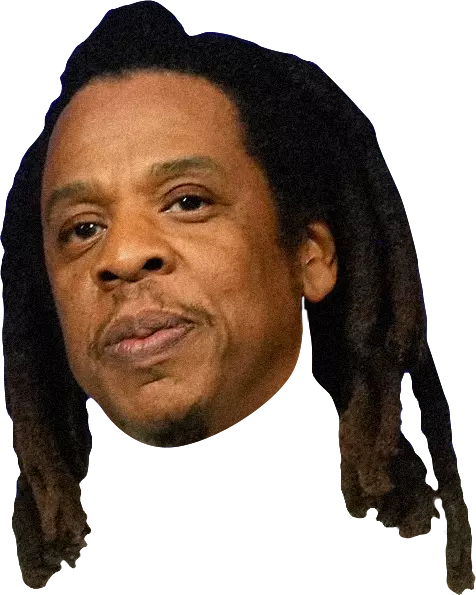
Jay-Z
Jay-Z is a billionaire whose dreams of a Times Square casino were vaporized.
Eleonora Srugo
This high-powered real estate agent can be found at Casa Cipriani or Gracie Mansion.


Robert and Zhan Petrosyants
Fun-loving twins who play host to the mayor at their trendy Italian eatery.

Billy Bildstein
The owner of Avant Gardner and Brooklyn Mirage fought the SLA and won (with help from powerful friends).

Scott Sartiano
How did the owner of Zero Bond score a seat on the Met's board? Probably not based on his resume, which we got our hands on.

Steve Cohen
Steve Cohen, one of the biggest outside spenders on behalf of Eric Adams, wants two things—a Mets championship and a casino.

Tony Argento
New York City's homegrown film studio mogul is a Gotham power broker out of central casting, and he allegedly used his cash and connections to bribe the Adams administration to block a street safety project in Greenpoint.

Michael Mazzio
Michael Mazzio found himself getting shut out of the lucrative tow truck industry—until he found a friendly ear in City Hall.
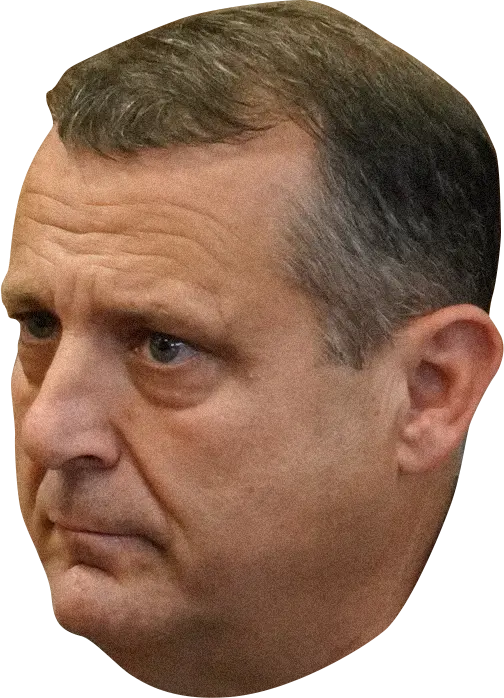
Rich Maroko
In 2021, the head of the powerful Hotel and Gaming Trades Council bet big on Eric Adams becoming mayor. But with three downstate casinos in the cards, he's shifted his support to Zohran Mamdani.